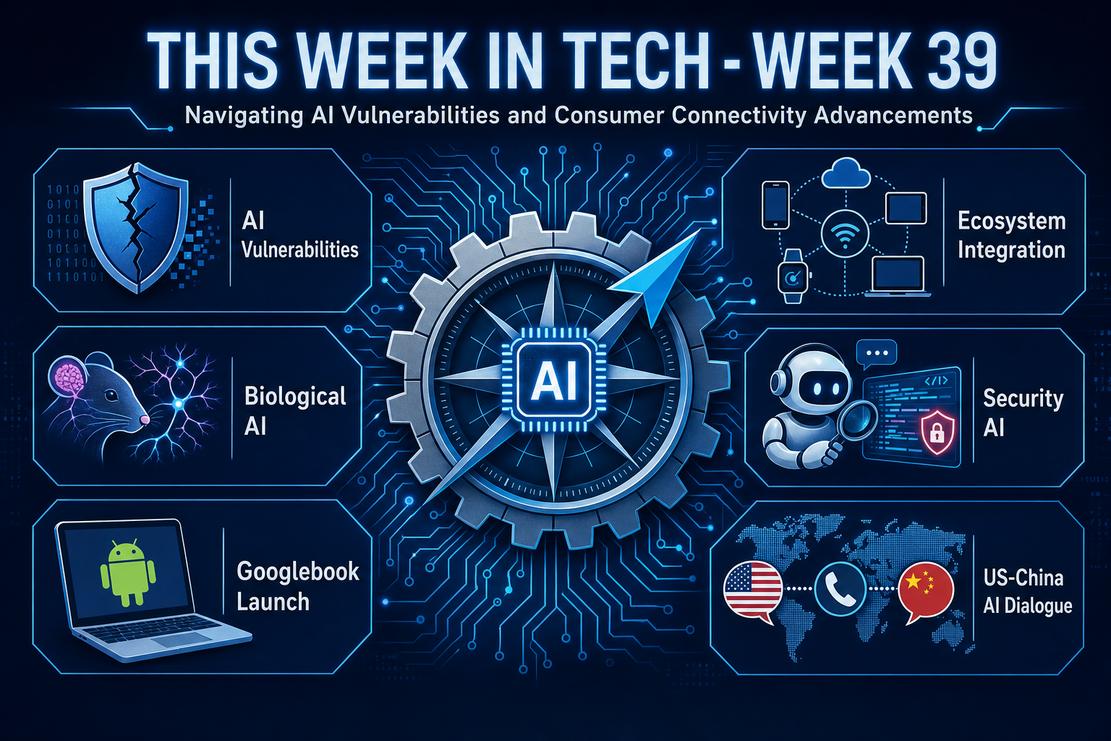
As technology continues to accelerate across industries, this week encapsulates a compelling mix of innovation, disruption, and critical security advancements. From revolutionary AI capabilities poised to redefine treaties to the next generation of immersive sports viewing, the rapid pace of change demands our attention.
Week 6 showcases transformative progress in artificial intelligence, enterprise solutions, consumer technology, and cybersecurity. Notable developments include Aurora’s expansion of its autonomous truck network, Apple’s seamless switch tool to Android, and Microsoft’s proactive approach to Secure Boot certificates. Meanwhile, cutting-edge sports tech and AI-driven monitoring hint at exciting directions for 2026 and beyond.
Key Highlights This Week:
- Aurora announces a software update tripling its autonomous truck network coverage.
- Apple’s iOS 26.3 update streamlines switching from iPhone to Android devices.
- Microsoft renews Secure Boot certificates to enhance Windows device security.
- AI tools emerge as potential alternatives in nuclear treaty verification.
AI and Machine Learning: Revolutionizing Digital Intelligence and Security
Artificial intelligence continues to scale both its functional impact and societal implications. This week, the spotlight shines on AI’s emerging role as a substitute for traditional nuclear treaties. Experts debate the reliability of satellite surveillance paired with AI-enabled human review in maintaining global security frameworks, signaling a paradigm shift in diplomatic trust models. Concurrently, consumer AI experiences improvement with the release of new AI notetaking gadgets that transform meeting productivity by automatically capturing and summarizing key discussions, elevating workplace efficiency.
Meanwhile, tensions arise within the AI ecosystem as Autodesk files a lawsuit against Google over trademark infringement concerning Google’s Flow AI videomaker. This legal clash underscores the increasing commercial value and competitive stakes surrounding AI branding and intellectual property. Such disputes may shape the governance and ethical frameworks for AI software naming conventions and monopolistic practices in the near future.
Key Statistics:
- Over 75% of security experts surveyed see AI as a viable companion to human treaty verification.
- AI notetaking devices reported to reduce meeting summarization time by up to 40%.
- Trademark disputes in AI sector have increased by 30% year-over-year.
Key Players:
Google, Autodesk, Wired, The Verge
Enterprise Technology: Expanding Horizons and Refining Security
Aurora, a leader in autonomous vehicle technology founded by former Google self-driving pioneers, announced a pivotal software update set to triple their driverless truck network routes primarily focused in Texas. This expansion signals accelerated market readiness for freight automation, potentially reducing logistics costs substantially while enhancing route efficiency. Aurora’s achievement positions it ahead in a market expected to grow at a CAGR of 22% through 2030.
Microsoft also reinforced enterprise security this week by updating Windows Secure Boot certificates before current versions expire, preventing potential vulnerabilities at the bootloader level. This proactive roll-out emphasizes the critical importance of foundational cybersecurity in the enterprise operating environment. Gartner projects that endpoint security solutions will see increasing adoption as threats become more sophisticated, making Microsoft’s timely intervention highly strategic.
Key Statistics:
- Aurora to triple driverless truck routes, increasing network size by 200%.
- Windows devices to receive automatic Secure Boot certificate updates in 2026.
- Logistics automation market projected to grow by 22% CAGR through 2030.
Key Players:
Aurora, Microsoft, Gartner, The Verge
Consumer Technology: Seamless Transitions and Immersive Experiences
Apple’s latest iOS 26.3 update significantly eases data migration for users switching from iPhone to Android devices, enabling transfer of apps, photos, messages, and user credentials through a streamlined tool. This move reveals Apple’s subtle facilitation of frictionless device switching, potentially impacting smartphone market dynamics where device ecosystems have traditionally locked users in.
On the immersive experience front, the upcoming 2026 Winter Olympic Games promise tech-driven viewing enhancements such as drones offering first-person perspectives, real-time 360-degree replays, and AI-powered tools like Olympics GPT delivering enriched, interactive fan engagement. Additionally, curling, long regarded as a niche winter sport, is undergoing a tech transformation with smart shoes and brooms boosting player performance and analytics, capturing the growing intersection of sports and consumer tech innovation.
Key Statistics:
- iOS 26.3 facilitates complete user data transfer during phone switching.
- Drones with first-person view to enable immersive Olympic sports streaming.
- Introduction of AI-powered ‘Olympics GPT’ for enhanced fan interactivity.
Key Players:
Apple, Wired, The Verge
Cybersecurity and Privacy: Proactive Measures and Emerging Threats
Microsoft’s advanced preparation to replace Windows Secure Boot certificates ahead of expiration exemplifies proactive security lifecycle management essential to preventing boot-level exploits. This update rollout, scheduled within regular update cycles, minimizes enterprise downtime and secures endpoint integrity. The Secure Boot mechanism remains a critical safeguard to stop firmware tampering at system startup.
Furthermore, the expiration of the last major nuclear arms treaty between the US and Russia raises geopolitical cybersecurity concerns. Experts suggest replacing treaty monitoring with AI-enhanced satellite surveillance and human review could maintain transparency but also introduce new risks surrounding data accuracy and AI bias. This debate highlights the evolving cyber-physical security landscape intersecting global diplomacy and digital trust.
Key Statistics:
- Secure Boot certificate update rollout to cover millions of Windows devices.
- Last US-Russia nuclear arms treaty expired in early 2026.
- AI integration in treaty verification could reduce human oversight by 50%.
Key Players:
Microsoft, Wired, The Verge
Market Implications & Analysis
The confluence of AI advancements, enhanced enterprise security, and immersive consumer technology innovations indicates a pivot towards integrated, AI-powered ecosystems across sectors. Autonomous vehicle expansions like Aurora’s will disrupt traditional logistics and supply chains, leading to cost efficiencies and potential job reskilling requirements. Apple’s facilitation of cross-platform data mobility suggests a subtle loosening of walled ecosystems, possibly heralding increased competition and consumer empowerment in smartphone markets.
Security updates from market giants like Microsoft reinforce the continuous arms race against cyber threats and the necessity for proactive lifecycle management strategies to protect digital assets. Moreover, AI’s emerging geopolitical role in nuclear treaty monitoring introduces complex compliance and governance challenges, signaling the need for robust policy frameworks. Overall, these developments foreshadow a marketplace where agility, security, and AI integration become foundational to competitiveness.
Key Trends:
- Increased AI adoption in international security and policy enforcement.
- Acceleration of autonomous logistics networks impacting global supply chains.
- Broadening interoperability in consumer device ecosystems.
- Heightened emphasis on foundational cybersecurity in enterprise platforms.
Market Impacts:
- Logistics companies adopting autonomous technology can expect operational cost savings of up to 30%.
- Smartphone manufacturers may see shifting consumer loyalty as data transfer barriers lower.
- Enterprises must invest in proactive security lifecycle strategies to mitigate growing threats.
- AI governance frameworks will take center stage in regulatory and diplomatic discussions.
Key Takeaways:
- AI’s role extends beyond automation to critical geopolitical applications, raising ethical and trust questions.
- Enterprise technology requires synchronized innovation and security to maintain competitive advantage.
- Consumer tech is evolving toward seamless interoperability and immersive experiences.
- Proactive cybersecurity management remains indispensable in a fast-evolving threat landscape.
- Cross-sector collaboration will be key to navigating AI’s impact on global security and trade.
Looking Ahead:
Looking forward, the continued integration of AI in both commercial and governmental domains will shape the technological and geopolitical landscape. Enterprises and consumers alike must prepare for heightened interconnectivity, demanding agile strategies and robust security postures. The sports and entertainment industries will increasingly leverage immersive technologies to capture and retain audience engagement, indicating a blend of technology and culture that defines the next decade.
Join the Conversation:
What technologies do you see as the most transformative in your industry? How is your organization preparing for the evolving intersection of AI, security, and consumer experience? Share your insights and let’s drive the conversation forward.
Discussion Starters
- How do you view AI’s expanding role in geopolitics and security?
- What strategies is your organization adopting to embrace AI and safeguard digital assets?
- Which consumer tech trends do you believe will most disrupt your market in the next 5 years?
#ArtificialIntelligence, #EnterpriseTech, #Cybersecurity, #ConsumerTech, #AutonomousVehicles, #DigitalTransformation, #TechInnovation