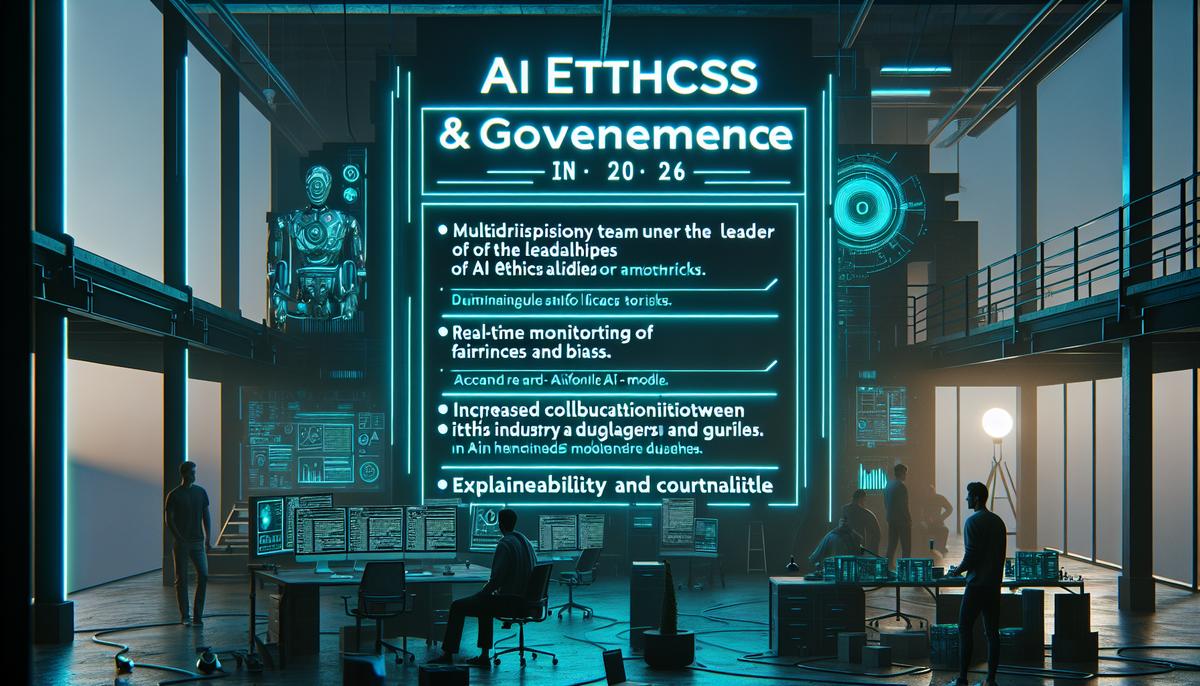
As AI capabilities rapidly evolve in 2026, CAIOs and AI leaders face unprecedented challenges and opportunities. Staying ahead requires understanding the latest strategic shifts shaping AI leadership today.
AI leadership now demands a blend of technology insight and strategic foresight, focusing on ethical governance, scalable innovation, and cross-functional collaboration. For example, a CAIO might implement an AI ethics board to ensure responsible AI deployment while simultaneously driving scalable solutions that enhance business outcomes. Leadership must balance risk management with agility, adapting to evolving AI regulations and market demands. In practical terms, this means aligning AI initiatives tightly with business goals while fostering a culture that embraces continuous learning and innovation.
• Emphasis on integrating ethical AI frameworks into core business strategy. • Shift towards building inclusive, multidisciplinary AI teams for broader impact. • Prioritising alignment between AI initiatives and overarching business objectives. • Adoption of rapid prototyping and iterative deployment to stay adaptive. • Increased focus on transparent AI governance to meet regulatory expectations.
Executives must recognise that AI leadership is no longer just technical but deeply strategic and cultural. The trend towards responsible AI use is influencing boardroom discussions worldwide. Companies investing in AI ethics and transparent practices gain trust and long-term resilience. Additionally, adaptive leadership that embraces experimentation while maintaining clear accountability will be key to sustaining competitive advantage in 2026’s evolving AI landscape.
How are you adapting your AI leadership strategies in 2026? Share your experiences or challenges in navigating AI’s strategic shifts. Let’s connect to exchange insights on driving impactful and responsible AI innovation across industries.
#AILeadership #CAIO #StrategicAI #AIInnovation #ResponsibleAI