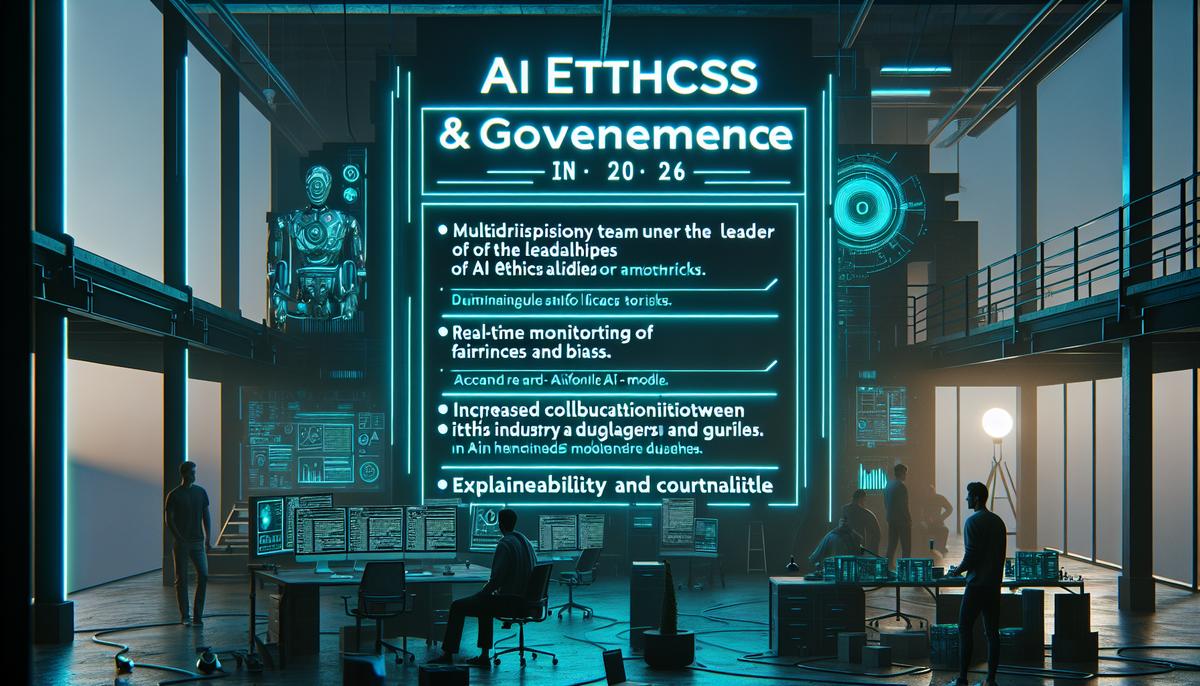
As AI technology accelerates, ethical leadership and regulatory clarity become essential for sustainable growth. In 2026, CAIOs face evolving responsibilities ensuring AI aligns with society’s values and regulatory demands.
Responsible AI governance is no longer optional—it’s critical for trust and innovation. For example, organizations adopting transparent AI audit trails can proactively manage compliance and ethical concerns. These practices help mitigate risks such as bias or unintended consequences while fostering stakeholder confidence. Leadership must integrate ethical frameworks into AI strategy to navigate the shifting landscape of regulation, public expectations, and technological capability.
– Emphasis on continuous updates to AI ethics policies aligned with new legal standards
– Implementation of multidisciplinary teams led by CAIOs to oversee AI risk
– Development of tools that monitor AI bias and fairness in real time
– Increased collaboration between industry and regulators for clear guidelines
– Growing importance of embedding explainability and accountability in AI models
Emerging trends in 2026 show AI governance is evolving from siloed compliance efforts to integrated strategic priorities. Companies investing in robust AI ethics frameworks experience fewer regulatory challenges and stronger brand reputation. Furthermore, global regulatory harmonization efforts are shaping consistent standards, reducing uncertainty for leaders. This environment pressures CAIOs to balance innovation speed with responsible deployment, emphasizing transparency and societal impact.
How is your organization adapting to 2026’s AI governance requirements? Share your experiences or challenges in fostering ethical AI leadership. Let’s connect to discuss strategies that drive responsible AI together.
#AILeadership #ResponsibleAI #EthicalAI #AIGovernance