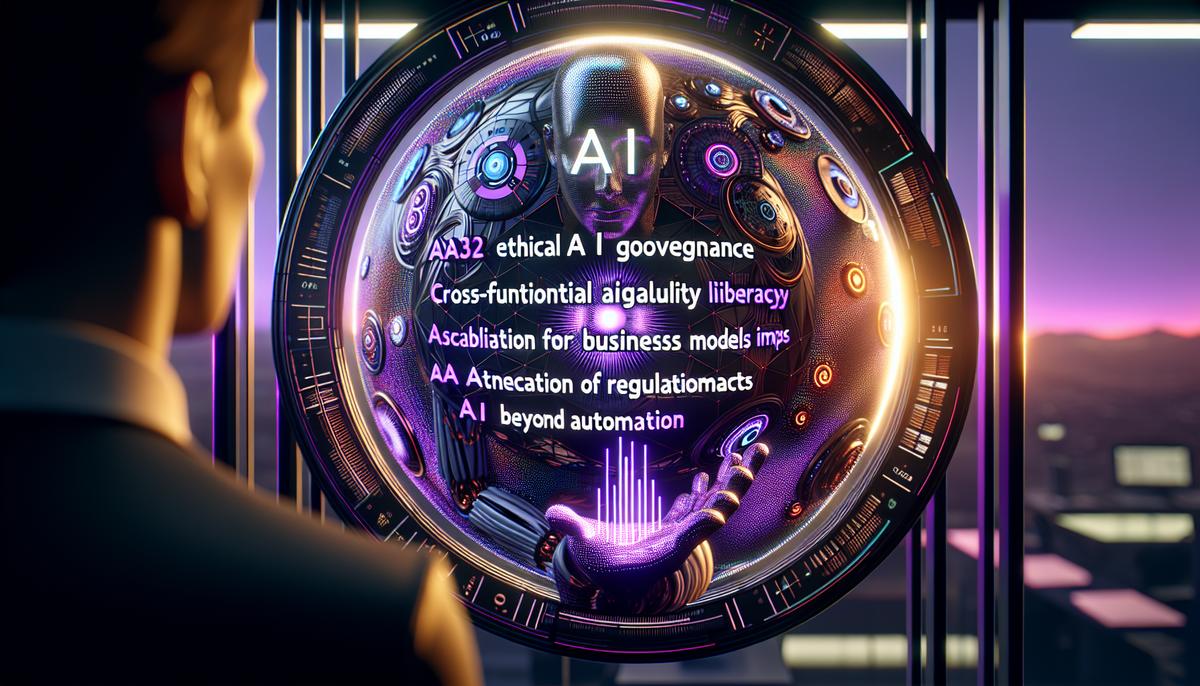
Artificial intelligence is rapidly reshaping business landscapes in 2026, making the role of Chief AI Officers (CAIOs) more critical than ever. Leaders who grasp the future trajectory of AI can steer their organizations toward sustainable innovation and competitive advantage.
CAIOs are now at the forefront of navigating complex AI ecosystems, balancing technological advancements with ethical and operational considerations. For example, a leading retail company recently redesigned its AI governance framework to prioritize transparency and customer trust, resulting in higher adoption of AI-driven personalization. This highlights the necessity for CAIOs to blend visionary thinking with practical policy implementation, ensuring AI initiatives align with organizational values and long-term goals.
• CAIOs must anticipate emerging AI technologies and their business implications to stay ahead.
• Leadership involves integrating AI strategy with corporate governance and ethical standards.
• Practical AI leadership includes managing cross-functional teams and cultivating AI literacy at all levels.
• Building scalable AI solutions that adapt to evolving data and compliance demands is essential.
In 2026, successful AI leadership is increasingly defined by agility and foresight. Leaders who invest in continuous learning and establish clear AI ethics frameworks enable their organizations to innovate responsibly. The ability to communicate AI’s strategic value—beyond technical details—to executives and stakeholders is becoming a differentiator. As AI capabilities expand, CAIOs must also anticipate regulatory shifts and prepare their teams for evolving compliance landscapes.
What strategies has your organization adopted to prepare for the AI-driven future? Share your experiences or challenges in leading AI initiatives. Let’s connect to exchange insights on effective AI leadership and how CAIOs can future-proof their roles in this dynamic environment.
#AILeadership #CAIO #ArtificialIntelligence #AIFutures #LeadershipStrategy