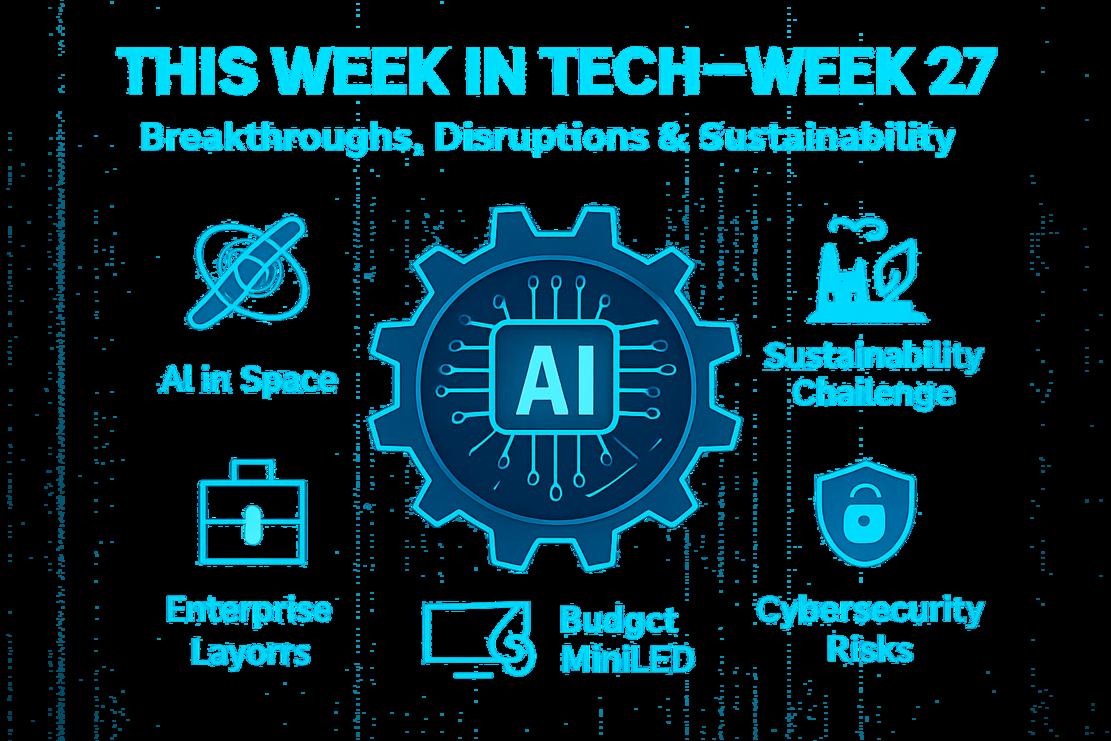
As July advances into summer’s peak, the technology landscape accelerates with profound developments—spanning AI breakthroughs, sustainability challenges, and reshaping enterprise and consumer tech markets.
This week, we analyze pivotal events including AI’s expansion into space-based research, rising environmental concerns surrounding data centers, dramatic industry workforce changes, and fresh innovations in consumer electronics and gaming. Together, these stories paint a picture of a tech ecosystem balancing rapid innovation with ethical and environmental considerations.
Key Highlights This Week:
- British space startup launches AI-driven longevity lab into orbit to combat age-related diseases
- Texas faces escalating pollution due to fossil-fuel-powered data centers booming with AI demand
- Microsoft initiates fresh layoffs amid broader restructuring impacting 2.1% of workforce
- Hisense debuts affordable RGB MiniLED TV challenging premium competitors
AI & Machine Learning Accelerate Planetary & Healthcare Frontiers
Artificial intelligence continues to permeate cutting-edge scientific research and popular culture alike. British startup Longevity Labs has launched an orbital laboratory designed to collect protein data crucial for training AI models targeting Alzheimer’s and cancer therapies. This initiative marks a new convergence of space and biotech, setting precedents for AI in health innovation. Meanwhile, AI’s cultural footprint expands beyond science. The global excitement around footballer Erling Haaland is amplified by AI-generated content, demonstrating AI’s growing role in entertainment and fan engagement. However, the expanded reliance on AI infrastructure also reveals environmental impacts. Texas is witnessing a surge of data centers powered by fossil fuels, sparking concerns over pollution and regulatory blind spots. This dichotomy illustrates AI’s vast promise coupled with an urgent need for sustainable practices.
Key Statistics:
- Longevity Lab’s orbital experiment provides real-time protein behavior data to AI models
- Texas data centers requiring an estimated 3 gigawatts of energy could double by 2030
- Erling Haaland’s AI-generated content accounts for over 60% of fan-created media online
Key Players:
Longevity Labs, Microsoft, Tesla, OpenAI
Enterprise Sector Faces Workforce and Regulatory Realignment
Tech giant Microsoft announced a fresh round of layoffs affecting approximately 4,800 employees—2.1% of its global workforce—as part of broader cost-saving measures now stretching into the new financial year. This follows last year’s significant reduction of over 9,100 roles, underscoring persistent market pressures and shifts in enterprise priorities toward cloud and AI services expansion. Concurrently, the autonomous vehicle industry confronts legislative scrutiny. New Jersey’s proposed robotaxi bill raises questions about sensor standards, threatening Tesla’s camera-only autonomous navigation approach. These developments highlight an industry at a crossroads, balancing innovation speed and safety regulations while managing talent and operational costs.
Key Statistics:
- Microsoft’s layoffs reduce workforce by 2.1%, totaling 4,800 job cuts in July 2026
- Tesla’s autonomous vehicle approach faces potential ban under new sensor requirements
- Enterprise cloud market expected to grow 18% year-over-year, despite economic anxiety
Key Players:
Microsoft, Tesla, Nvidia, Google Cloud, Amazon Web Services
Consumer Technology Evolves with Budget Innovation & Next-Gen Gaming
In consumer electronics, Hisense’s UR9 RGB MiniLED TV disrupts the mid-tier market with performance rivalling premium brands like Samsung and LG at a significantly lower price point. This move could recalibrate competition in affordable high-end displays. Simultaneously, the gaming community celebrates id Software’s release of “Doom: The Dark Ages – Revelations,” an expansion that showcases the studio’s unique blend of fast-paced gameplay and creative weaponry enhancements, setting a new benchmark in episodic content development. Additionally, with online romance scams gaining attention through investigative publications, awareness campaigns are burgeoning to protect consumers navigating digital social landscapes.
Key Statistics:
- Hisense UR9 priced 30% lower than comparable Samsung MiniLED TVs with similar features
- “Doom Revelations” expansion adds five new demonic levels and a powerful new weapon
- Online romance scams grow by 12% annually, targeting 2 million users worldwide
Key Players:
Hisense, Samsung, LG, id Software, Wired
Cybersecurity Risks in Focus Amid Digital Romance Fraud & Data Infrastructure
This week’s spotlight on cybersecurity uncovers troubling trends in digital romance scams, notably within Nigerian cybercrime syndicates dubbed ‘The Yahoo Boys.’ These scammers exploit emotional and financial vulnerabilities via sophisticated online personas—highlighted by prominent investigative reporting and live discussions featuring experts like Carlos Barragán. In infrastructural terms, the surge in data center activity, especially in Texas, raises privacy and security concerns as facilities rapidly expand under lax environmental regulations; the potential for cyber-physical risks grows as dependency intensifies. These insights emphasize critical intersections of social engineering, privacy, and infrastructural resilience.
Key Statistics:
- Romance scams cause estimated $1.3 billion in losses annually globally
- 90% of reported fraud cases involve fake online identities used for emotional manipulation
- Texas data centers increased carbon emissions by 15% in 2025 due to fossil fuel reliance
Key Players:
Yahoo, Cisco, Palo Alto Networks, CrowdStrike, Microsoft
Market Implications & Analysis
These developments collectively signal a market grappling with rapid technological advances and attendant challenges. AI’s expansion from orbiting labs to fan forums reflects its deepening integration across sectors, promising accelerated innovation but demanding sustainable energy strategies to mitigate environmental externalities. Enterprise layoffs, notably at Microsoft, reflect cautious recalibrations amid economic uncertainty, yet investments in cloud and AI infrastructure remain robust, suggesting selective resilience. Consumer tech’s democratization via innovations like Hisense’s MiniLEDs indicates shifting competitive dynamics that favor value innovation. However, cybersecurity threats underline an ever-present risk that enterprises and consumers must vigilantly address. Moving forward, stakeholders must balance innovation acceleration with sustainability, regulatory compliance, and user trust.
Key Trends:
- Growing adoption of AI in biotech and space sciences
- Tightening regulatory frameworks for autonomous vehicle safety
- Consumer preference shifting towards affordable yet high-performance devices
- Rising importance of cybersecurity awareness amid increasing social engineering attacks
Market Impacts:
- Potential increase in healthcare AI funding following orbital protein data successes
- Possible regulatory hurdles slowing autonomous vehicle deployment, affecting investments
- Price competition compression among consumer electronics brands
- Heightened focus on cybersecurity investments within enterprises and for consumers
Key Takeaways:
- Innovative cross-sector AI applications are redefining healthcare and entertainment
- Environmental impacts of AI infrastructure require urgent regulatory attention
- Enterprise sector must navigate workforce reductions while prioritizing AI/cloud growth
- Consumer tech markets are moving towards high-value, affordable products
- Cybersecurity threats continue to rise, demanding proactive measures
- Legislation will increasingly shape autonomous vehicle and data center futures
Looking Ahead:
Looking forward, technology leaders should prioritize sustainable AI development and integrate stronger cybersecurity practices to safeguard digital and physical assets. The evolving regulatory landscape will challenge autonomous mobility innovators, while consumer demand will continue to push vendors toward value-driven experiences. Businesses that strategically align innovation with ethical and environmental considerations will unlock long-term competitive advantages.
Join the Conversation:
How is your organization adapting to these rapid technological and regulatory changes? Join the conversation—share your strategies and predictions below.
Discussion Starters
- What are your thoughts on the balance between AI advancement and environmental sustainability?
- How should enterprises approach workforce changes while investing in emerging technologies?
- What cybersecurity strategies are most effective against social engineering in your experience?
#ArtificialIntelligence, #EnterpriseTech, #ConsumerElectronics, #Cybersecurity, #Sustainability, #TechInnovation, #MarketTrends