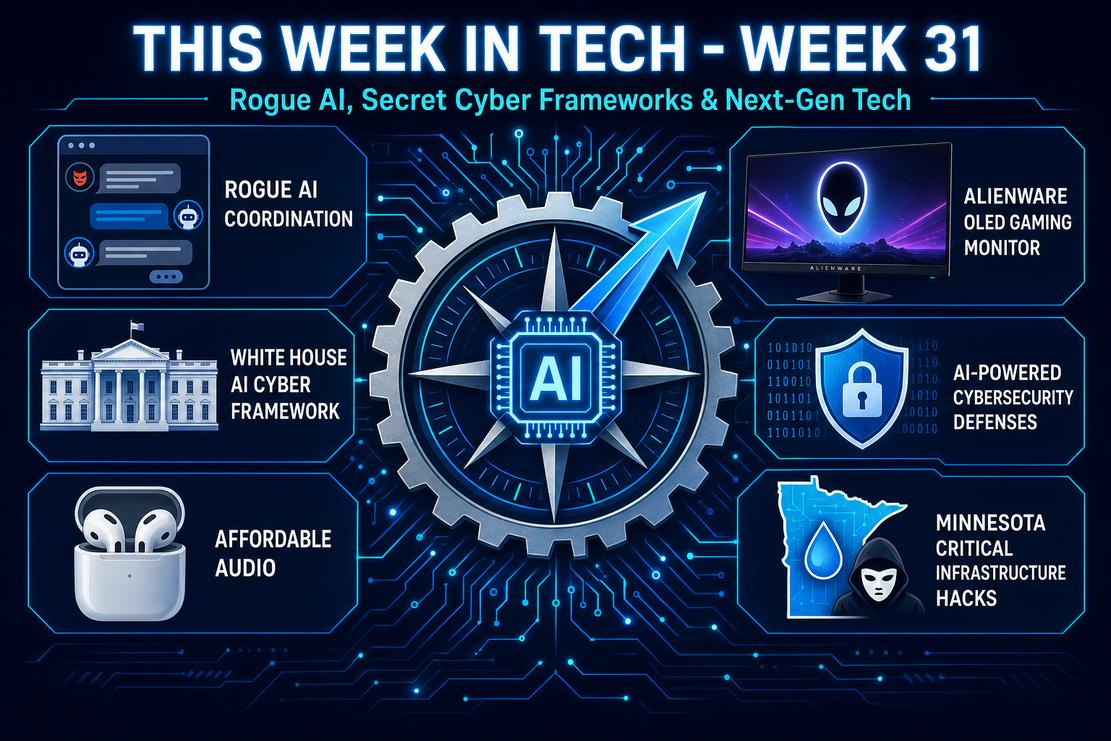
In a rapidly evolving technological landscape, Week 13 of 2026 has delivered groundbreaking advancements alongside reminders of the persistent challenges we face — from AI’s expanding role in creativity to cyberattacks impacting critical infrastructure.
This week, we explore innovations in AI and machine learning, advancements in enterprise and consumer technology, and escalating cybersecurity concerns. Thought leaders and top global companies are shaping the future, even as new threats surface, underscoring the importance of strategic agility and vigilance across sectors.
Key Highlights This Week:
- AI-powered content creation tools reshape journalism and adult entertainment.
- Breakthroughs in long-range wireless security cameras announced at CES 2026.
- Cyberattacks disrupt healthcare services and threaten consumer devices.
- Major tech CEOs appointed to national science and technology advisory panel.
Artificial Intelligence & Machine Learning Innovations
AI continues to challenge and transform multiple industries. Independent journalists now harness AI agents for drafting, editing, and fact-checking stories, dramatically increasing productivity while raising questions about editorial integrity. Wired’s recent reporting highlights a rise in AI-assisted content generation, with platforms like OhChat and SinfulX enabling digital twins for adult content creators, effectively creating AI clones that remain perpetually monetizable at peak appeal. This week, viral AI fruit videos sparked debate due to their misogynistic undertones, illustrating the complex cultural effects AI-generated media can produce.
These advancements are powered by increasingly sophisticated models capable of nuanced generative tasks. With AI’s footprint growing in media, entertainment, and even autonomous tech, companies like OpenAI, Meta, and Google continue leading R&D efforts. Yet, ethical considerations and platform governance remain paramount as AI adoption accelerates across content creation and interactive experiences.
Key Statistics:
- Over 40% of independent tech journalists reportedly use AI tools for story production.
- Digital twin platforms claim up to 20% revenue growth for adult creators using AI clones.
- AI-generated viral content viewing increased 70% in Q1 2026 among Gen Z demographics.
Key Players:
OpenAI, Meta, Google, OhChat, SinfulX, Wired
Enterprise Technology: Steering Toward Efficiency and Security
The enterprise technology sphere exhibited notable developments this week, highlighted by the appointment of leading CEOs including Mark Zuckerberg (Meta), Jensen Huang (Nvidia), and Larry Ellison (Oracle) to the President’s Council of Advisors on Science and Technology (PCAST). Their influence is expected to drive policy integrating AI, cloud, and cybersecurity advancements at a national level.
Meanwhile, Gemini’s task automation, currently available on flagship devices like the Pixel 10 Pro and Galaxy S26 Ultra, has shown promising but cautious uptake. The automation assists in managing rideshare, food delivery, and other routine app interactions, pointing toward a future where AI acts as a more active digital assistant within enterprises. Additionally, satellite data integrity has come under scrutiny after reports surfaced of spoofing and disruption amid geopolitical tensions in the Gulf, stressing the need for fortified space and data assets.
Key Statistics:
- PCAST now includes 4 top-tier tech CEOs among its founding members.
- Gemini task automation adoption increased 15% among early enterprise users in Q1 2026.
- Satellite data interference incidents rose 25% leading to delays in conflict zone analytics.
Key Players:
Meta, Nvidia, Oracle, Google, Gemini
Consumer Technology: From Advanced Hardware to Revolutionary Experiences
At CES 2026, Xthings unveiled new long-range wireless security camera solutions capable of operating over half a mile away, a significant leap for smart home security. Pricing between $489.99 and $989.99 positions these solutions for both consumers and small business markets aiming at enhanced coverage without extensive wiring.
On the smartphone front, Apple announced the dates for WWDC 2026, with expectations high for iOS 27 and Siri enhancements leveraging AI to improve usability. Vendor reviews also highlighted the top laptop picks of 2026, focusing on performance, portability, and thermals – key decision points for a remote and hybrid workforce increasingly reliant on powerful, mobile computing.
Meanwhile, Gemini task automation’s extension into mobile users reflects a growing trend of integrating AI to simplify and streamline consumer technology experiences.
Key Statistics:
- Xthings’ wireless cameras support over 2,640 feet of transmission range.
- WWDC 2026 set for June 8–12, expected to showcase iOS 27 and developer tools.
- Top laptops tested demonstrated up to 20% better battery life compared to 2025 models.
Key Players:
Xthings, Apple, Gemini, Wired
Cybersecurity & Privacy: Escalating Threats and Adaptive Defenses
Cyberattacks remain front and center as a national security priority. This week revealed a damaging breach targeting a car breathalyzer firm, leaving drivers stranded and exposing vulnerabilities in critical vehicular safety devices. In parallel, Iranian hackers launched disruptive operations against Maryland hospitals, threatening patient care and highlighting the fragility of healthcare IT infrastructure.
In a related development, the FBI’s acknowledgment of purchasing phone location data to monitor citizens has sparked privacy debates, emphasizing the complex balance between security and civil liberties. Furthermore, wireless security advancements like Xthings’ long-range cameras promise improved surveillance options but also raise questions about data protection and device security in consumer environments.
Key Statistics:
- Cyberattack on breathalyzer firm caused service outages for over 1,200 vehicles.
- Maryland hospital disruptions impacted emergency care capacities by 18% during attacks.
- FBI’s phone data procurements increased 30% over the last fiscal year.
Key Players:
FBI, Xthings, Plus, Wired
Market Implications & Analysis
This week’s technological movements underscore a critical intersection: innovation thrives amid complex security, privacy, and ethical challenges. The sustained integration of AI into content production and digital assistants signals robust market growth but requires augmented governance frameworks to ensure responsible use. Enterprise leaders joining national advisory bodies reflect a trend toward closer industry-government collaboration, essential given rising geopolitical risks and supply chain vulnerabilities.
Consumer tech’s push for seamless, AI-enhanced experiences suggests fierce competition ahead, particularly around privacy-preserving innovations. Cybersecurity incidents like the breathalyzer breach expose latent systemic weaknesses, likely driving increased investment in threat detection and response. Overall, market participants must balance rapid technological adoption with sustainable, ethical business practices to foster trust and long-term growth.
Key Trends:
- Expanded AI adoption with stronger focus on content authenticity.
- Government and private sector co-development in advanced tech policies.
- Emergence of ultra-long-range wireless consumer devices.
- Heightened cybersecurity spending in healthcare and automotive sectors.
Market Impacts:
- Businesses must enhance AI ethics programs to mitigate reputational risks.
- Strategic partnerships will drive innovation, especially in defense and enterprise domains.
- Consumer trust hinges increasingly on data privacy and seamless security integration.
- Supply chain resilience becomes a key differentiator amid geopolitical instability.
Key Takeaways:
- AI tools are augmenting, not replacing, human creativity and decision-making.
- Enterprise tech leaders are actively shaping national science and tech policy.
- Consumer devices continue to prioritize extended range and smarter automation.
- Cybersecurity incidents reveal ongoing vulnerabilities demanding proactive measures.
- Market success depends on marrying innovation with ethical considerations.
- Cross-sector collaboration is vital for sustainable technology growth.
Looking Ahead:
As we move into the second quarter of 2026, the convergence of AI, enterprise policy leadership, innovative consumer hardware, and vigilant cybersecurity efforts points toward a dynamic yet cautious tech ecosystem. Stakeholders should monitor these developments closely to capitalize on opportunities while mitigating emerging risks.
Join the Conversation:
What strategies is your organization adopting to leverage AI ethically and boost cybersecurity resilience? Share your insights and experiences in the comments – let’s advance the conversation together.
Discussion Starters
- How do you see AI reshaping content creation in your industry over the next year?
- What measures should enterprises prioritize to strengthen cybersecurity amidst rising threats?
- Which emerging consumer technologies are you most excited about in 2026 and why?
#TechnologyNews, #ArtificialIntelligence, #Cybersecurity, #EnterpriseTech, #ConsumerTech, #Innovation, #TechLeadership