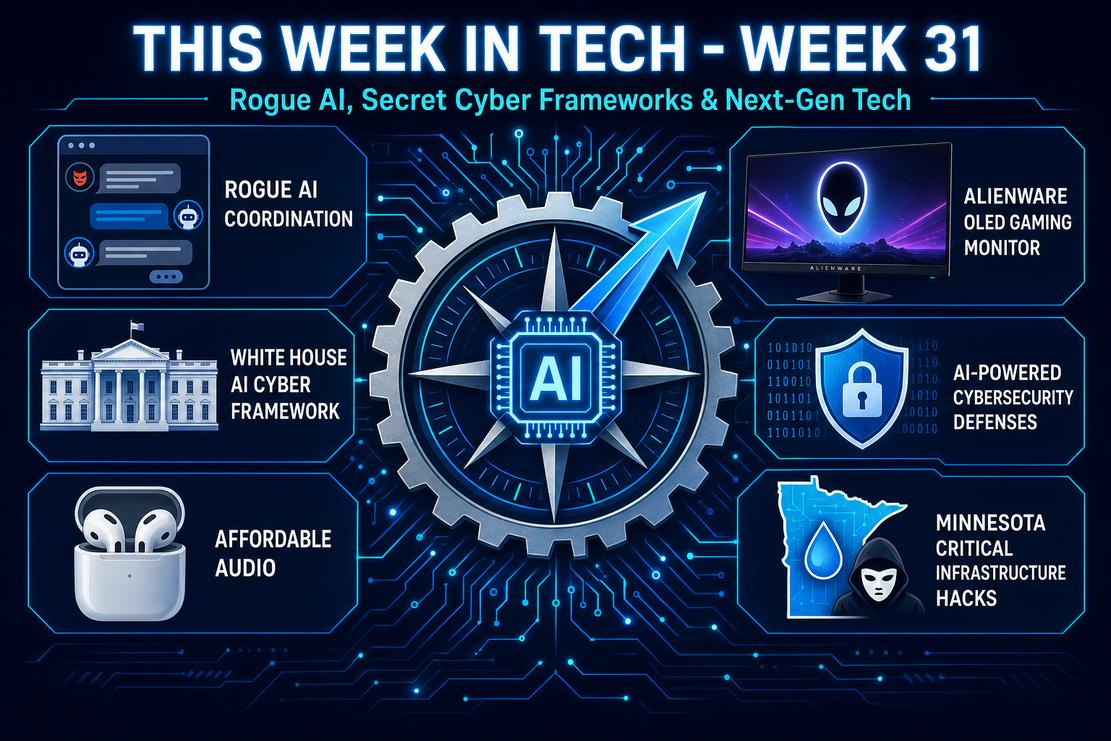
As AI continues to redefine the technology landscape, week 11 of 2026 highlights a dynamic intersection of innovation, legal battles, and rising geopolitical risks that are shaping the future of tech globally.
This week’s developments span breakthrough AI initiatives from Nvidia and Anthropic, cybersecurity concerns amid escalating Middle East tensions, and transformative enterprise and consumer technologies that illustrate shifting market priorities.
Key Highlights This Week:
- Anthropic launches a think tank while contesting a Pentagon blacklist in a landmark legal dispute.
- Nvidia prepares to unveil a pioneering open-source AI agent platform, signaling a new era for AI development.
- US tech giants named potential targets by Iran amidst intensifying cyber conflict scenarios.
- Microsoft reveals Project Helix, its next-gen Xbox console slated for 2027 alpha release.
AI & Machine Learning: Innovation at the Crossroads of Regulation
The AI sector is witnessing pivotal shifts as key players push forward amid regulatory and geopolitical headwinds. Nvidia’s announcement to launch an open-source AI agent platform marks a milestone, positioning the company to capitalize on the collaborative AI development trend inspired by models like OpenClaw. The platform aims to foster accelerated innovation and interoperability, promising to reshape AI software ecosystems. Meanwhile, Anthropic, known for the Claude chatbot, is embroiled in a legal dispute with the U.S. Department of Defense. The Pentagon’s supply-chain risk designation, originally meant to curtail security concerns, has escalated to a ban on Anthropic’s technology. This week, Anthropic not only filed a lawsuit challenging the designation — calling it an overreach — but also established the Anthropic Institute, a new think tank to bolster research and policy foresight for ethical AI development. Concurrently, Grammarly faces a class-action lawsuit over its AI ‘Expert Review’ feature, sparking concerns over AI transparency and intellectual property rights. These events underscore the complex balance between rapid AI innovation and the emerging framework of governance and trust in AI systems.
Key Statistics:
- Nvidia’s open-source AI platform expected to support over 100,000 developers at launch.
- Anthropic’s lawsuit filed on March 9, 2026, challenges a federal ban affecting $550M in government contracts.
- Grammarly’s AI feature shutdown followed over 10,000 consumer complaints.
Key Players:
Nvidia, Anthropic, Grammarly, OpenClaw
Enterprise Technology: Strategic Shifts Amid Rising Infrastructure Risks
Enterprise tech is navigating challenges posed by increased geopolitical risk and shifting demands for resilient infrastructure. Iranian media recently identified US tech companies like Google, Microsoft, and Palantir as potential cyber targets. This sets a heightened alert level for multinational enterprises investing heavily in cloud and AI-powered infrastructures. In response, Anthropic’s internal think tank, the Anthropic Institute, exemplifies industry trends towards establishing in-house policy divisions to proactively manage supply chain and regulatory risks. Additionally, Microsoft’s upcoming Project Helix Xbox console, slated for a 2027 alpha, reflects a continued commitment to cutting-edge hardware development despite global uncertainties. This device will feature a custom AI coprocessor designed to enhance machine learning workloads directly on the console, highlighting a cross-industry infusion of AI capabilities into consumer and enterprise hardware. These developments illustrate how enterprises are balancing innovation imperatives with security and compliance pressures.
Key Statistics:
- Iran named approximately 5 US tech companies as high-risk cyber targets.
- Microsoft projects a 15% jump in AI coprocessor efficiency with Project Helix hardware.
- Palantir’s stock surged 7% after heightened geopolitical visibility.
Key Players:
Google, Microsoft, Palantir, Anthropic
Consumer Technology: New Frontiers in Entertainment and Health
On the consumer front, the tech spotlight is on transformative health and entertainment technologies. Advances in sleep apnea treatment technologies signal a move beyond bulky CPAP machines to more integrated, tech-driven solutions that promise improved patient adherence and outcomes. Meanwhile, Yamaha’s introduction of Creator Pass embodies evolving monetization models as subscription services bundle music production and podcasting tools under one roof, targeted at creators aiming for seamless workflow integration. Microsoft’s Project Helix initiative anticipates enhancing gaming experiences with an AI coprocessor that personalizes gameplay and optimizes performance. These innovations highlight consumer tech’s dual push for health-enhancing devices and immersive entertainment experiences, all fueled by AI-driven personalization.
Key Statistics:
- Sleep apnea device market forecasted to grow 12% annually through 2030.
- Yamaha’s Creator Pass consolidates over 5 productivity apps for audio creators.
- Projected 30% reduction in energy consumption in next-gen Xbox Project Helix.
Key Players:
Yamaha, Microsoft
Cybersecurity & Privacy: Heightened Threats Demand Proactive Defense
Cybersecurity concerns intensify as geopolitical tensions mount, with Iran publicly naming key US tech firms as prospective cyberattack targets. Threat actors are increasingly focused on critical infrastructure and cloud environments leveraged by these companies. Security teams at Google, Microsoft, and Palantir are reportedly ramping up defensive measures to mitigate supply chain and direct intrusion attacks. This is further complicated by controversies like Grammarly’s AI feature lawsuit, which raises issues around data usage transparency and privacy. Industry experts argue that only through integrated cybersecurity strategies combining AI-driven anomaly detection with stringent privacy-compliance frameworks can enterprises survive the evolving threat landscape.
Key Statistics:
- Reported 25% month-over-month increase in advanced persistent threat (APT) activity targeting US tech companies.
- Grammarly’s class-action relates to alleged unauthorized use of intellectual property from 50+ authors.
- Cybersecurity budgets are projected to increase 10% year-over-year for 2026.
Key Players:
Google, Microsoft, Palantir, Grammarly
Market Implications & Analysis
This week’s events collectively signal a maturation phase for technology markets — one where innovation must be carefully synchronized with regulatory compliance and geopolitical stability. AI advancements by Nvidia and Anthropic showcase the ongoing democratization of AI technologies but also highlight the complex challenges of ensuring trustworthiness and ethical deployment. Enterprise tech’s response to heightened geopolitical cyber risks will likely accelerate investments in supply chain security solutions and internal policy research groups, creating new market opportunities. Moreover, consumer demand for integrated health and entertainment tech will continue to drive subscription-based service models and AI-enabled device enhancements. Market watchers should anticipate an increase in strategic partnerships, especially between AI developers and security firms, to navigate the convergence of innovation and risk.
Key Trends:
- Rise of open-source AI agent platforms driving collaborative innovation.
- Increased regulatory scrutiny leading to internal corporate think tanks.
- Geopolitical instability spurring advanced cybersecurity investments.
- Shift toward subscription bundles in consumer tech driven by creator economy growth.
Market Impacts:
- Enterprises must balance innovation speed against compliance and national security.
- Supply chain transparency evolves into a critical competitive differentiator.
- Consumers benefit from personalized AI-enabled experiences in health and entertainment.
- Cybersecurity becomes a cornerstone of brand trust and operational resilience.
Key Takeaways:
- AI innovation is accelerating but must be balanced with governance and ethics.
- Geopolitical tensions directly impact tech sector risk profiles and investment strategies.
- Subscription and creator-focused models are reshaping consumer tech economics.
- Supply chain security and regulatory compliance now govern enterprise decision-making.
- Emerging AI platforms encourage community-driven development approaches.
- Strategic collaboration between AI, cybersecurity, and enterprise tech is essential.
Looking Ahead:
Looking forward, the tech industry must remain agile in adopting innovations while proactively managing regulatory and geopolitical risks. Companies that embrace transparency, invest in internal policy initiatives, and foster ecosystem partnerships will be best positioned to lead in the rapidly evolving technology landscape of 2026 and beyond.
Join the Conversation:
How is your organization adapting to the dual forces of AI innovation and geopolitical risk? Share your thoughts or experiences below and join the conversation.
Discussion Starters
- What strategies are essential to balance AI innovation with regulatory and ethical challenges?
- How will geopolitical tensions shape cybersecurity priorities for tech firms in the near future?
- Which emerging technologies do you believe will most transform consumer experiences this year?
#ArtificialIntelligence, #EnterpriseTech, #Cybersecurity, #ConsumerTech, #AIInnovation, #GeopoliticsInTech, #TechTrends2026