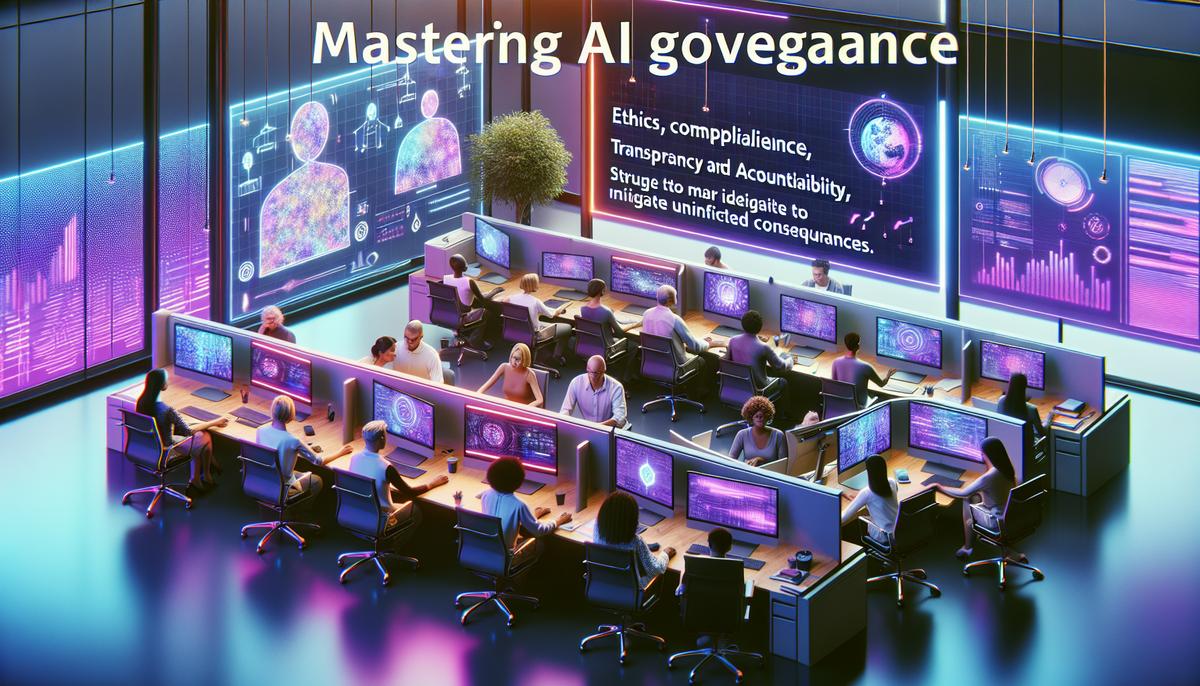
As AI rapidly evolves in 2026, CAIOs and AI leaders face unprecedented strategic challenges and opportunities. Staying updated on key developments is crucial for executives aiming to lead with purpose and impact.
The role of the Chief AI Officer (CAIO) has become central to driving AI initiatives that align with business goals. Successful AI leadership today blends technological know-how with strategic vision, fostering innovation while managing risks such as ethical implications and regulatory compliance. For example, a CAIO might spearhead integrating AI into customer experience platforms to deliver personalised services while ensuring data privacy standards are met, balancing innovation with responsibility.
• Leading AI strategy remains a priority to harness transformative technologies effectively. • Managing AI risk, including bias and compliance, is now a core leadership responsibility. • Cross-functional collaboration between AI teams and executives drives successful adoption. • Practical use cases include AI-powered decision support and operational efficiency improvements. • Continuous learning about AI trends is vital in adapting to evolving markets.
In 2026, AI leadership is increasingly seen as a key driver of competitive advantage, requiring executives to integrate AI ethics and governance deeply into their strategy. AI maturity models are shifting from theoretical frameworks to practical execution with measurable business outcomes. Professionals must cultivate agility to adapt as AI capabilities and regulations evolve, making proactive leadership a necessity.
How is your organisation adapting its AI leadership to meet these shifting demands? Share your experiences or challenges in aligning AI strategy with business goals. Connect with peers to explore how CAIOs can best navigate this dynamic landscape in 2026.
#CAIO #AILeadership #BusinessStrategy #AIInnovation #Leadership2026