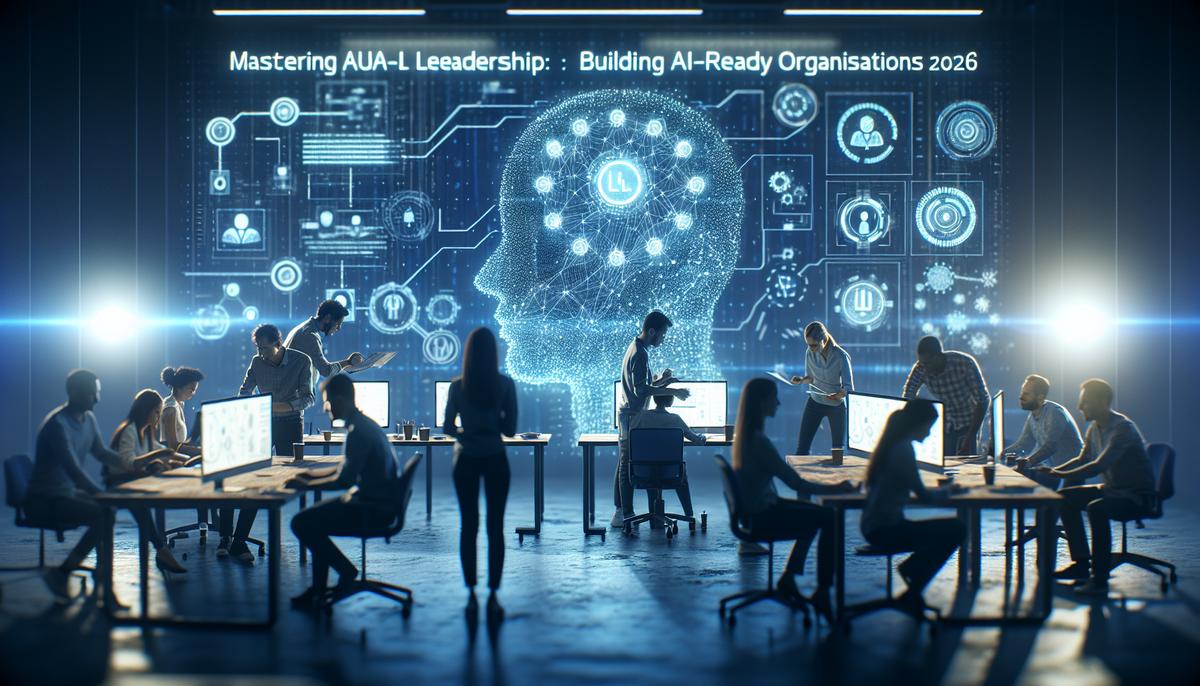
As AI reshapes industries in 2026, leadership focused on building AI-ready organisations has become essential. The role of Chief AI Officers (CAIOs) and AI leaders is evolving to drive skills development, culture change, and workforce transformation like never before.
AI leadership today goes beyond technology adoption—it’s about embedding AI fluency across teams and fostering a culture of continuous learning. Effective CAIOs craft upskilling programs that empower employees with AI capabilities, reshaping job roles and performance expectations. For example, a global retailer investing in AI training for its frontline staff boosts operational efficiency and customer experience simultaneously. This approach aligns strategic goals with workforce readiness, ensuring organisations not only implement AI but thrive alongside it.
• Developing AI skills across diverse teams to create a foundational knowledge base
• Cultivating an adaptive culture that embraces AI-driven change
• Implementing structured upskilling initiatives tailored to evolving job functions
• Transforming workforce strategies to align with digital and AI capabilities
• Integrating ethical leadership and accountability in AI governance
2026’s AI leadership demands an agile mindset combined with strategic workforce planning. Organisations prioritising AI culture and upskilling see higher innovation rates and better talent retention. The role of CAIO is central in navigating ethical considerations while managing scaling difficulties. These trends underscore the importance of proactive leadership investing in both people and technology to sustain competitive advantages.
How is your organisation building AI readiness through leadership and upskilling? Share your experiences or challenges in the comments. Let’s connect to discuss how evolving AI leadership models can transform workforce strategies and culture for the future.
#AILeadership #CAIO #WorkforceTransformation #Upskilling #AITalent