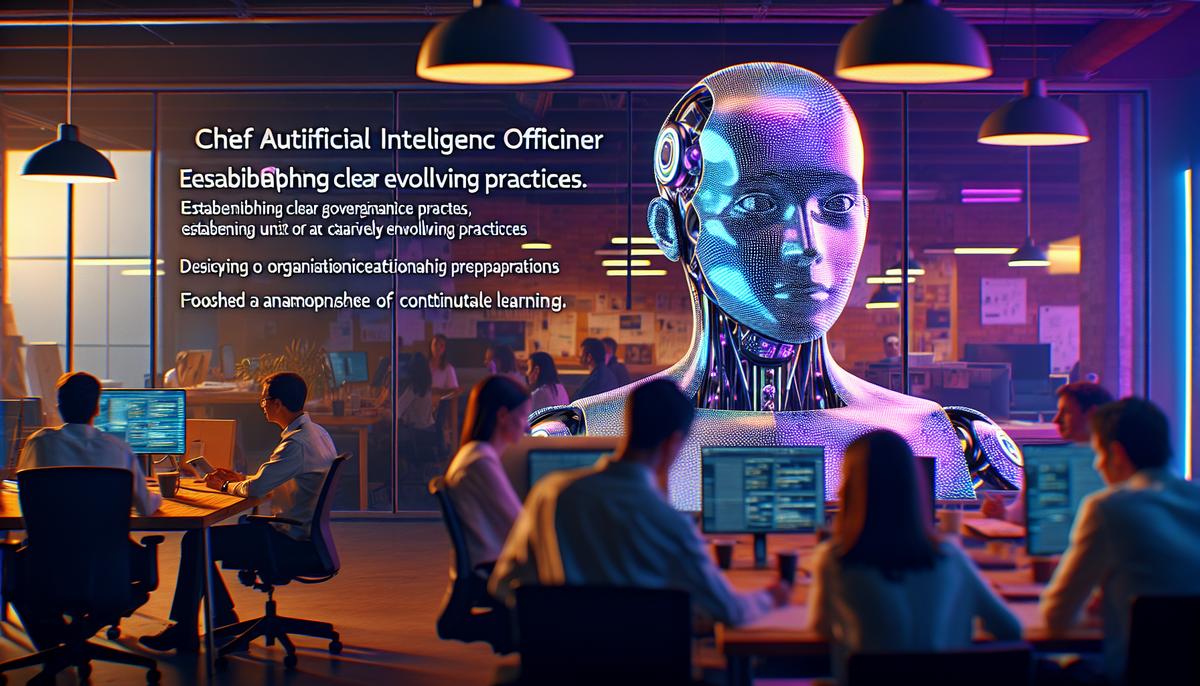
AI leadership is evolving rapidly in 2026, demanding that Chief AI Officers (CAIOs) anticipate future trends and prepare organisations accordingly. Staying ahead means understanding not just technology but also the strategic role AI plays in business transformation and risk management.
Successful AI leadership requires balancing innovation with governance. For example, CAIOs must navigate ethical AI deployment while aligning AI initiatives with core business goals. This includes preparing teams for AI-driven decision-making and fostering collaboration across departments. By embedding AI into enterprise strategy, leaders ensure sustainable growth and competitive advantage.
– CAIOs should prioritise AI ethics and responsible use to build trust with stakeholders. – Aligning AI strategies with organisational objectives drives measurable business impact. – Effective AI leadership involves cross-functional collaboration and continuous upskilling. – Preparing for AI-driven disruption includes risk management and regulatory readiness.
In 2026, AI leadership is recognised as central to digital resilience. Trends show CAIOs becoming key to innovation pipelines, with a growing focus on transparency and explainability. Companies investing in thoughtful AI futures enjoy stronger agility and ethical reputations. The implications are clear: AI leadership will define competitive advantage and stakeholder trust in the coming years.
How is your organisation preparing for the evolving AI landscape? Share your experiences or challenges in AI leadership, and let’s explore strategies together. Connect to exchange insights on building AI-ready cultures and future-proofing businesses.
#AILeadership #ChiefAIOfficer #FutureOfAI #ResponsibleAI #DigitalStrategy