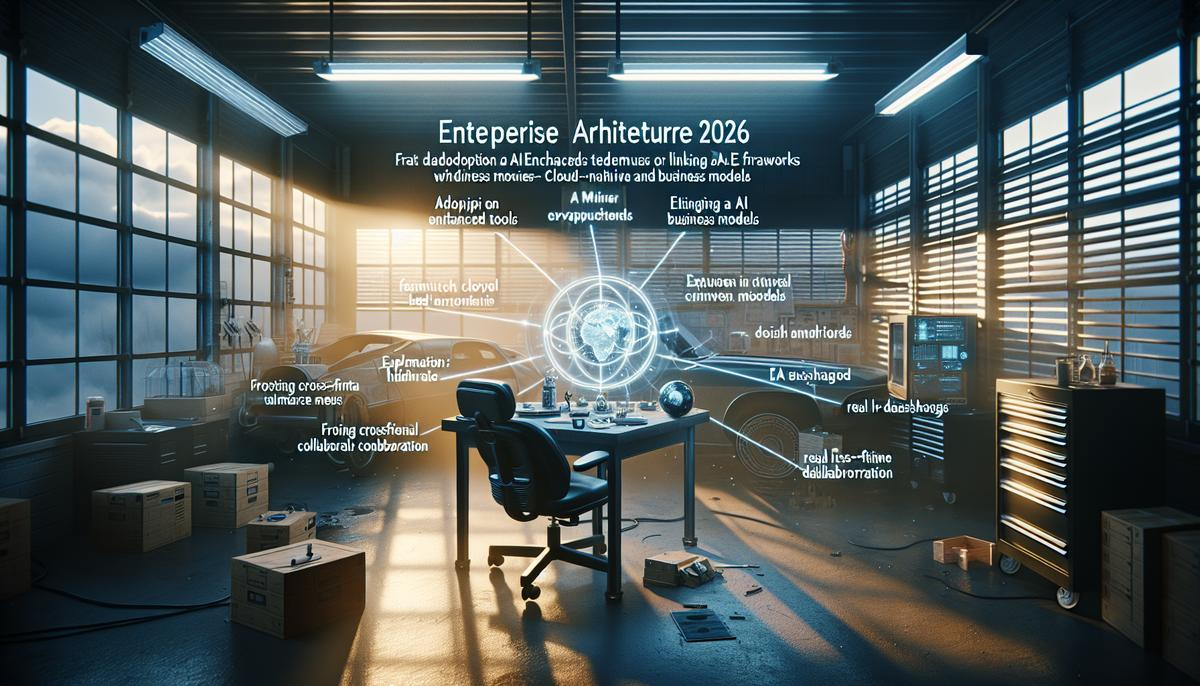
In 2026, Enterprise Architecture (EA) stands as a critical enabler for organizations confronting digital transformation and ever-increasing complexity. Businesses face rapidly evolving technology landscapes, demanding adaptive and resilient EA frameworks. The spotlight on tailored architectures that bridge agility with governance has never been brighter, making EA essential for sustainable innovation and operational excellence.
This year, the EA discipline has shifted towards integrating emerging AI-driven automation and continuous business capability modeling as core components. Enterprise architects are leveraging enhanced tools for scenario planning and strategic roadmapping, addressing disruptions with precision. The growing recognition of EA as the backbone for digital ecosystems emphasizes its role in aligning IT strategies with business goals. Companies increasingly view EA not just as a documentation exercise but as a dynamic, value-delivering function critical to enterprise success in 2026.
Key 2026 developments in Enterprise Architecture include:
• Adoption of AI-enhanced EA tools for improved decision-making and predictive analysis.
• Greater emphasis on linking EA frameworks with business capability models to drive responsiveness.
• Expansion of EA into cloud-native and hybrid environments to support distributed architectures.
• EA’s role in fostering cross-functional collaboration between technology and business stakeholders.
• Increasing availability of real-time EA dashboards for governance and compliance monitoring.
Three vital takeaways for 2026 professionals:
First, integrating AI within EA processes empowers faster assessments and more strategic IT investments, reducing risk and increasing adaptability. Second, embedding business capabilities at the core of EA models ensures that architectural decisions directly support evolving market and operational needs. Third, as enterprise environments diversify with cloud and hybrid systems, EA frameworks must evolve to govern these complex landscapes effectively, ensuring seamless interoperability and security. Organizations adopting these trends position themselves as leaders in digital resilience and innovation.
As 2026 unfolds, how are you integrating emerging technologies and business alignment into your Enterprise Architecture practice? Share your insights and experiences to shape this evolving field. Let’s connect to discuss how up-to-date EA strategies can unlock new value and competitive advantage in today’s dynamic markets. Engaging with peers on these developments is key to advancing our profession’s impact.
#EnterpriseArchitecture #DigitalTransformation #AIinEA #BusinessCapability #2026Tech